
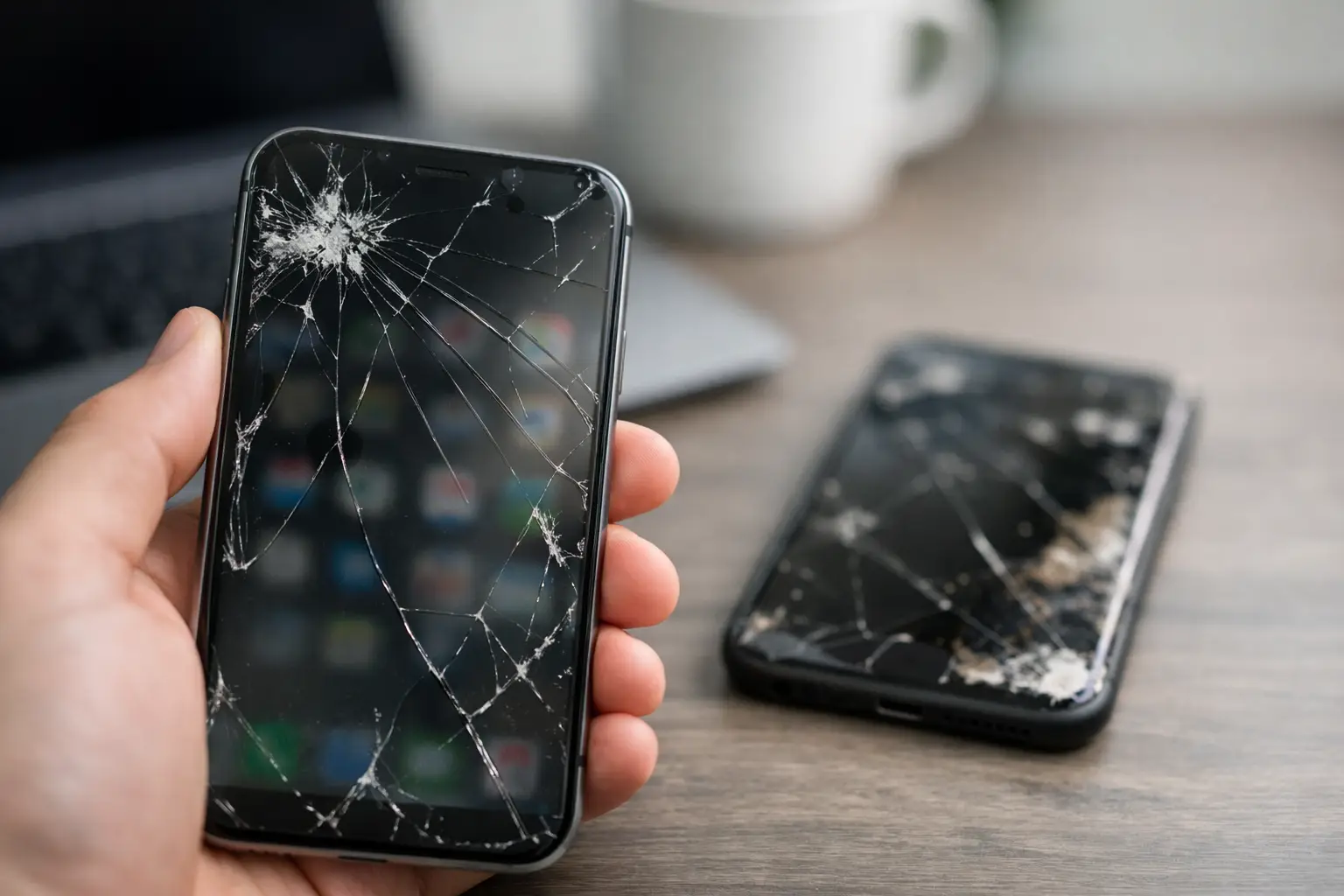
You notice a small crack after a drop in the car park, tell yourself it’s only cosmetic, and carry on. A week later, the line has crept across the display, typing feels off, and you’re starting to wonder if you’ve left it too long. If you’re asking can a cracked iPhone screen get worse, the short answer is yes – and in many cases, it does.
A cracked screen rarely stays exactly as it is. Sometimes the damage remains stable for a while, but just as often it spreads with normal daily use. Pressure in your pocket, heat changes, another minor knock, or even tapping the same part of the screen over and over can turn a small crack into a much bigger repair issue.
Can a cracked iPhone screen get worse over time?
Yes, and not always in an obvious way at first. The glass may crack further, but the bigger concern is what the crack means for the layers underneath. An iPhone screen is not just one sheet of glass. It is a tightly built assembly, and once that outer layer is damaged, the whole unit becomes more vulnerable.
In some cases, you might only see a hairline crack for days or weeks. In others, the display starts showing black spots, flickering, discoloured lines or patches that stop responding to touch. That is when a simple broken screen becomes a disruption to work, messages, banking apps and everything else you rely on your phone for.
Why cracked screens usually get worse
The main reason is structural weakness. Once the glass is compromised, it no longer distributes pressure properly. Every tap, swipe and squeeze creates stress around the damaged area, and that stress can push the crack further across the panel.
Temperature changes can make things worse too. Moving from a cold morning outside into a warm office or car can cause the materials in the screen to expand and contract slightly. On an undamaged screen that is not a problem. On a cracked one, it can encourage the damage to spread.
Moisture and dust are another issue. Even a very fine crack can create an entry point. You may not drop the phone in water, but everyday exposure matters – rain, steam from the bathroom, condensation, or grit from a bag or pocket. Once debris or moisture gets inside, the risk moves beyond the glass and into the display and internal components.
Everyday use is enough to make it worse
People often assume screen damage only gets worse if the phone is dropped again. That is not always true. Routine use is enough. Taking the phone in and out of a pocket, setting it face down on a table, carrying it in a bag, or pressing on the damaged area while texting can all add up.
That is why a crack that looked manageable on Monday can look very different by Friday.
What can happen if you leave it?
The first stage is usually spreading cracks. After that, the touch layer may start misbehaving. Parts of the screen might stop responding, or the phone may register touches you did not make. This is often called ghost touch, and it can make the device frustrating or nearly impossible to use.
You can also see display issues. Black blotches, green or white lines, flickering, dim areas or full screen failure are all signs that the damage has gone deeper than the top glass. At that point, using the phone becomes more uncertain, and the repair becomes more urgent.
There is also the practical side. Cracked glass can catch your finger, shed tiny shards, and make a screen protector sit badly. For parents, commuters, students and anyone who uses their phone all day, that quickly becomes more than a cosmetic annoyance.
Signs your cracked iPhone screen is getting worse
Some warning signs are easy to miss because they build gradually. If the crack is spreading, if the screen feels rougher than before, or if touch response changes in one corner, that matters. The same goes for brightness issues, dead spots, flickering or the phone behaving as if it is being touched when it is not.
Battery drain can also appear if the display has been damaged and is no longer functioning properly. It is not always the screen, but after an impact, unusual battery use alongside display problems is worth checking.
If the frame is bent as well as the screen being cracked, that is more serious. A bent housing can place constant pressure on the replacement screen later if not dealt with properly, so it is best assessed sooner rather than later.
Is it ever safe to keep using a cracked iPhone?
It depends on the severity. A very small hairline crack with no touch issues, no lifting glass and no display faults may remain usable for a short time. But usable and sensible are not always the same thing.
If you rely on your phone for work, travel, two-factor authentication, family contact or study, waiting carries a risk. The screen might hold up for a month, or it might fail at the worst possible time. That uncertainty is what catches people out.
If the crack is near the edge, over the front camera area, or around the home gesture area on older models, it is more likely to interfere with daily use. If there are visible chips, sharp edges or any sign of the display lifting, it should be repaired promptly.
Does a screen protector stop it getting worse?
A screen protector can help in limited cases, but it is not a repair. If the crack is minor and the glass is still stable, a good protector may reduce further surface movement and make the phone safer to handle for a short period. It can also stop tiny fragments from lifting.
What it cannot do is restore structural strength to the screen or protect the display underneath from damage already in progress. If the touch layer is affected or moisture has a route in, a protector will not solve that. It is a temporary measure, not a fix.
Why quick repair often saves hassle
The longer a cracked screen is left, the more chance there is of secondary problems. What starts as broken glass can become display failure, touch faults or internal damage from dirt and moisture. That does not mean every delayed repair turns into a major issue, but the risk does increase.
For most people, the bigger concern is disruption. Phones are not optional anymore. They hold banking apps, NHS logins, rail tickets, university messages, family photos and work emails. Once the screen starts failing, everyday life gets awkward very quickly.
A straightforward screen replacement is usually far less stressful than trying to nurse a damaged phone along until it becomes unusable. That is especially true if you need the job done quickly and want to know exactly who is handling it.
What to do while you wait for repair
If you cannot get it repaired immediately, treat the phone carefully. Avoid pressure on the screen, keep it away from moisture, and do not keep testing the damaged area by pressing it repeatedly. If you can still use it safely, back it up as soon as possible in case the display fails without warning.
It is also sensible to avoid cheap DIY kits unless you are experienced. iPhone screens are delicate, and a poor-quality repair can create more problems than it solves. Fit, finish, touch performance and long-term reliability all depend on the quality of the part and the care taken during fitting.
For local customers in Southsea and Portsmouth, this is usually where a fast, warranty-backed repair makes more sense than gambling on a temporary workaround.
When to stop using it and get it repaired immediately
If the screen is flickering, showing lines, registering false touches, exposing sharp glass, or the display is going black, stop putting it off. The same applies if the phone has been exposed to rain or moisture after the screen cracked. Those are signs the damage is no longer just cosmetic.
At that stage, repair is less about appearance and more about protecting the phone from failing altogether. A proper assessment can tell you whether it is still just the screen assembly or whether the impact has affected anything else.
At iHelp Gadget Repairs, that is exactly the sort of problem we see every day – people hoping a crack will stay minor, only to find it has spread faster than expected.
If your iPhone screen is cracked but still working, think of that as a window to sort it before it turns into a bigger inconvenience. A small crack has a habit of becoming tomorrow’s urgent repair.