
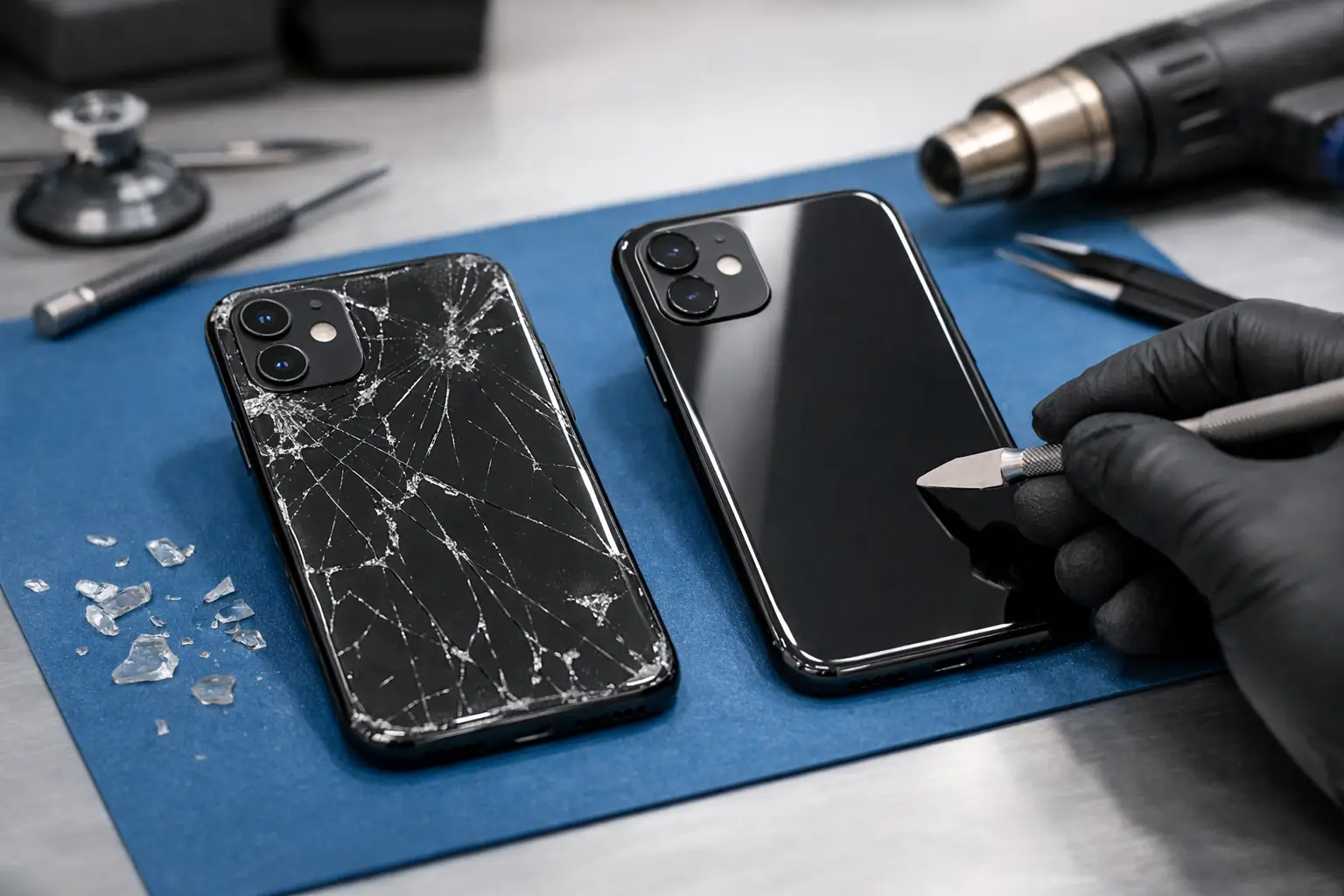
A cracked iPhone back is easy to put off. The phone may still switch on, charge and fit in a case, so it can feel like a cosmetic problem rather than an urgent one. But broken rear glass can leave sharp edges, allow dirt and moisture closer to internal components, and make a later repair more involved. This complete guide to iPhone back glass repair explains what is actually damaged, which repair route makes sense and what to expect from a local specialist.
Why iPhone back glass repair is different
On many newer iPhones, the back glass is bonded firmly to the rear housing. It is not simply a panel that can be lifted away like a screen protector. Underneath sit delicate components, including the wireless charging assembly, magnets for MagSafe on compatible models, camera areas and, depending on the model, cables and brackets that need protecting throughout the repair.
That is why the best repair method depends on the exact iPhone model and the extent of the damage. A few cracks around the lower edge are very different from shattered glass around the camera lenses, a bent frame or a phone that has also stopped charging wirelessly.
The rear glass also plays a part in the phone’s overall structure. If the frame has been knocked out of shape by a heavy drop, fitting new glass alone may not give a neat, secure result. An honest technician should check the housing, camera surround, lenses, charging function and wireless charging before quoting for the work.
When cracked back glass needs attention
A small hairline crack does not always mean your iPhone will fail immediately. If the phone is working normally and is protected by a good case, you may choose to monitor it for a short time. Even then, avoid treating it as water-resistant. Once the rear glass is cracked, the original seals can no longer be relied upon.
Repair becomes more pressing when glass is lifting, fragments are coming away, sharp edges are exposed or cracks extend around the camera. You should also arrange an assessment promptly if wireless charging becomes unreliable, the rear of the phone feels loose, the camera image is affected or the device was dropped hard enough to bend the frame.
Do not use superglue, tape over the camera lenses or try to remove loose glass with household tools. Adhesive can seep into openings, interfere with heat dissipation and make a professional repair harder. If fragments are loose, place the phone in a case and handle it carefully until it can be inspected.
Complete guide to iPhone back glass repair options
There are two main ways a specialist may approach an iPhone back glass repair: replacing the rear glass itself or replacing the complete rear housing. Neither is automatically better. The right answer comes down to the model, the condition of the frame and the parts required.
Rear glass-only replacement
A glass-only repair removes the damaged panel while retaining the original housing and internal parts where practical. On suitable models, specialist equipment can carefully separate the broken glass from the frame, protecting the components beneath it before a replacement panel is fitted.
This can be a good option where the frame is straight, the camera area is undamaged and the rest of the phone is healthy. It avoids replacing more parts than necessary and can offer good value. However, it is precision work. Poorly controlled heat, aggressive tools or rushed cleaning can damage the wireless charging coil, leave fragments behind or produce an uneven finish.
Rear housing replacement
A housing replacement involves transferring the iPhone’s original internal components into a new rear chassis assembly. This may be the more sensible route if the frame is bent, the camera surround is damaged, the rear glass has shattered extensively or there are issues beyond the glass itself.
It is a more involved repair because components such as the battery, cameras, charging port and motherboard may need to be moved safely into the replacement housing. The benefit is that it can restore the phone’s structure as well as its appearance. The trade-off is that labour, parts availability and turnaround can differ from a straightforward rear glass repair.
A reliable repairer will explain which route they recommend and why. If someone gives a price without asking for the model or checking whether the frame is damaged, it is worth being cautious.
What affects the cost and turnaround time?
There is no single price for every iPhone because Apple has used different designs across its ranges. The model is the first factor. Older iPhones with simpler construction can be handled differently from recent models with MagSafe components, larger camera housings and more tightly integrated internals.
The severity and location of the damage matter too. Cracks away from the camera may be more straightforward than broken glass surrounding the lenses. A bent chassis, damaged camera lens, failed wireless charging coil or swollen battery changes the scope of the job.
Part quality is equally important. A low price may be tempting, but it is worth asking what is being fitted and whether the work is warranty-backed. Good quality replacement parts, proper preparation and careful testing cost more than a quick cosmetic cover-up, but they reduce the chance of problems returning.
Back glass work can also take longer than a screen replacement. iHelp Gadget Repairs can complete many iPhone repairs in under 30 minutes, but rear glass repair should be assessed on its own merits rather than promised to a generic timescale. The condition of the phone and the correct repair method should set the turnaround, not pressure to rush.
Will the repair restore water resistance?
This is one of the most common questions, and the honest answer is that it cannot be guaranteed in the same way as a factory-sealed new phone. iPhones leave the factory with controlled seals and testing processes. Once a device has been opened or the rear glass has cracked, its original water-resistance rating should not be assumed.
A careful technician can fit adhesive and seals correctly, but it is still sensible to keep a repaired phone away from water, steam and heavy rain. Do not test it in a sink or take it into the shower. Water damage is unpredictable and may not be covered by a repair warranty.
What should be checked before and after repair?
Before handing over your iPhone, back it up if you can. Back glass repair should not require access to your personal data, but a current backup is sensible before any hardware work. You can remove your case, make a note of existing faults and, if requested, disable Find My iPhone so the device can be properly tested.
A proper post-repair check should cover more than the appearance of the new glass. The technician should test charging, wireless charging where supported, cameras, flash, buttons, microphones and speakers. They should also check that the phone sits flat, the camera lenses are clear and there are no sharp edges or loose sections around the repair.
Ask about the warranty before the work begins. A warranty should state what it covers, how long it lasts and what exclusions apply, particularly around accidental damage and liquid exposure. Clear terms are a sign that the repairer is prepared to stand behind their workmanship.
Choosing a local repair specialist in Portsmouth
Back glass repair is not the job to choose solely on the lowest online quote. Look for a local technician who will inspect the device, explain the repair path in plain English and give a clear price before proceeding. Reviews matter because they show whether a business communicates well when a repair is more complicated than expected.
Direct accountability makes a real difference too. At iHelp Gadget Repairs, customers deal directly with Dan from the first enquiry through to completion, rather than being passed between a counter, a call centre and an unknown workshop. For a device you use for work, study, family life and everyday payments, that clarity is reassuring.
A cracked back does not have to mean replacing an otherwise good iPhone. Get the model and damage assessed properly, choose a repair method that suits the phone’s condition, and give it the careful workmanship it deserves.