
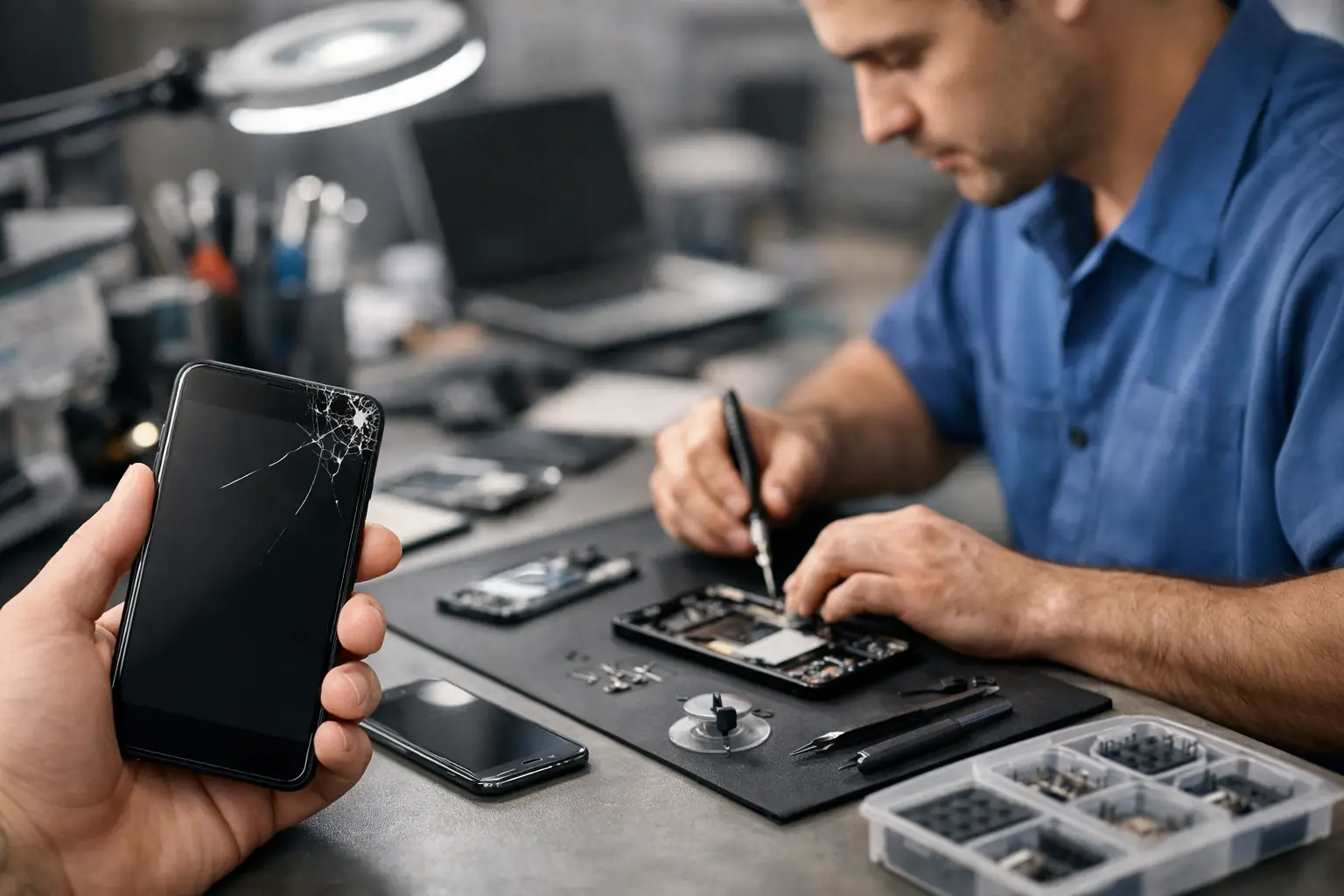
A cracked screen is obvious. A repair that turns into a bigger problem is not. Asking the best questions for a phone repair shop before you hand over your iPhone, Samsung, iPad or MacBook can make the difference between a quick, dependable fix and an unexpected bill, poor-quality part or frustrating delay.
For most people in Portsmouth and Southsea, a phone is not a spare gadget. It is how you work, study, pay, navigate, speak to family and access essential accounts. You need clear answers from the outset, not vague promises at the counter.
Why the right questions matter before a repair
Repair shops are not all the same. Some specialise in rapid screen replacements, while others focus on more involved board-level faults. Parts can vary in quality, warranties can have exclusions, and a low headline price may not include everything needed to complete the job.
A good local technician should be comfortable explaining the likely fault, the repair options and the limits of what can be guaranteed before work begins. If the answers are unclear, that is useful information in itself.
The best questions for a phone repair shop
1. What do you think the fault is, and will you diagnose it first?
A broken screen is usually straightforward, but charging issues, battery drain, overheating, no power and water damage are not always what they appear to be. A phone that will not charge may have a damaged charging port, a worn battery, debris in the port or a fault on the main board.
Ask whether the shop will inspect and test the device before committing to a repair. You should also ask whether there is a diagnostic fee, whether it is deducted from the final repair cost, and what happens if you decide not to proceed. Honest diagnosis protects you from paying for a part that was never the real problem.
2. What part will you use?
“High quality” can mean different things, so it is worth asking for a plain-English explanation. Depending on the model, a repairer may offer genuine manufacturer parts, original-equipment-quality parts or premium aftermarket alternatives. The best option depends on your device, budget and priorities.
For a newer iPhone, genuine parts may be the right choice if you want the closest possible match for display quality and manufacturer functions. For an older handset, a carefully selected premium replacement can be a sensible, cost-effective repair. What matters is that the shop tells you what is being fitted rather than leaving you to guess.
3. Will all of the phone’s features work afterwards?
A screen replacement should not only make the display visible again. Ask about touch response, brightness, proximity sensors, front camera operation, fingerprint recognition, Face ID and display warnings where relevant. Modern devices can require careful transfer or calibration of small components.
No reputable technician should promise a feature can be restored if it was already damaged by the impact or water exposure. They should, however, test what they can before and after the repair and explain any existing faults. This is particularly important where a device has been dropped heavily or has a bent frame.
4. Is the quoted price the final price?
Ask for the full fitted price, including parts, labour, VAT where applicable and any diagnostic charge. A clear quote should also cover likely extras, such as a new frame if the old one is too bent to hold a replacement screen safely.
There are occasions when a repair becomes more complicated after the device is opened. That does not automatically mean the shop is being difficult. The key question is whether they will contact you for approval before doing chargeable additional work. You should never be surprised by the total at collection.
5. How long will the repair take?
Turnaround time matters when your phone holds your boarding passes, work messages, banking apps and school contacts. For common iPhone screen repairs, a capable local specialist may be able to complete the work in under 30 minutes if the correct part is in stock. Other repairs, including liquid damage diagnosis or MacBook faults, may need longer testing.
Ask whether the time quoted is an appointment slot, the actual repair time or an estimate based on parts arriving. If you need the device back the same day, say so early. A straightforward answer is more useful than an unrealistic promise.
6. What warranty comes with the repair?
A warranty is one of the clearest signs that a repairer stands behind their workmanship. Ask how long it lasts, what it covers and what is excluded. A parts-and-labour warranty should normally cover a fault with the fitted part or the repair itself, but it will not cover a fresh drop, cracked replacement glass, liquid damage or unrelated future failures.
Read the detail rather than comparing warranty lengths alone. A long warranty is valuable only when the business is accessible, accountable and clear about how it will deal with a genuine issue. At iHelp Gadget Repairs, iPhone screen repairs are backed by a lifetime screen warranty, alongside a 12-month warranty on repairs, giving local customers a clear route back if something is not right.
7. Will I lose my photos, messages or apps?
For a standard screen, battery or charging-port repair, your data should usually remain on the device. However, there is never a sensible reason to assume that important data is completely risk-free, particularly if the phone has water damage, a serious fault or an unstable operating system.
Back up your device before the appointment if you can. Ask whether you will need to provide your passcode, and why. A technician may need access to test cameras, speakers, charging and other functions after the repair. You can remove sensitive banking apps or enable a repair mode where your device supports it, but do not make testing impossible and then expect every feature to be verified.
8. Is there any risk that the repair will not solve the problem?
This is a particularly valuable question for charging, network, overheating and liquid-damage faults. A skilled technician can assess the most likely cause, but hidden corrosion or board damage may only become clear during testing. Good repairers explain this upfront instead of presenting a tentative diagnosis as certain.
Ask what the next step would be if the initial repair does not resolve the issue. In some cases, a lower-cost part replacement is worth trying. In others, especially on an older phone with several faults, putting more money into the device may not be sensible. Straight advice is better than being pushed towards work with little chance of success.
9. Do you test the device before and after the repair?
Pre-repair testing records what was already working and identifies faults caused by the original damage. Post-repair testing confirms that the repair has done what it should. This matters because a damaged handset can have more than one issue, even if only one is immediately noticeable.
Ask what will be checked. On a phone, this may include the display, touch, cameras, speakers, microphones, charging, Wi-Fi, mobile signal and biometric functions. The exact tests depend on the fault and model, but a repair should not be treated as complete merely because the screen lights up.
10. Can you repair this model, and do you have the part in stock?
Not every part is equal, and not every repairer should attempt every device. Foldable phones, recent flagship models and MacBooks can require specialist tools, experience or parts that need ordering. A shop that gives a careful answer is often more trustworthy than one that claims every repair is instant.
If the part is not in stock, ask how long it will take to arrive and whether the price is fixed once it has been ordered. For urgent repairs, availability may influence your decision as much as price.
11. What happens if I have a problem after collection?
Find out how the shop handles a concern after repair. Can you return directly to the same technician? Will the device be checked promptly? Is there a record of the work completed? Local, owner-led businesses have a real advantage here because you are not trying to explain your repair history to a different call centre agent each time.
Keep your receipt and note the warranty terms. If an issue appears, report it early and avoid further damage to the device before it can be inspected.
12. Is repair still the sensible option?
The final question is sometimes the most useful. A reliable repair shop should be willing to tell you when repair is not good value. The answer depends on the age of the device, its condition, the cost of the fault and how long you expect to keep it.
A new battery or screen can give a well-loved phone another useful few years. A handset with major water damage, repeated faults and a damaged main board may be better replaced. You deserve that judgement before spending money, not after.
Take a moment to ask these questions before choosing a repairer. The right shop will answer them clearly, treat your device with care and give you confidence that the person fixing your phone will still be there if you need them afterwards.