
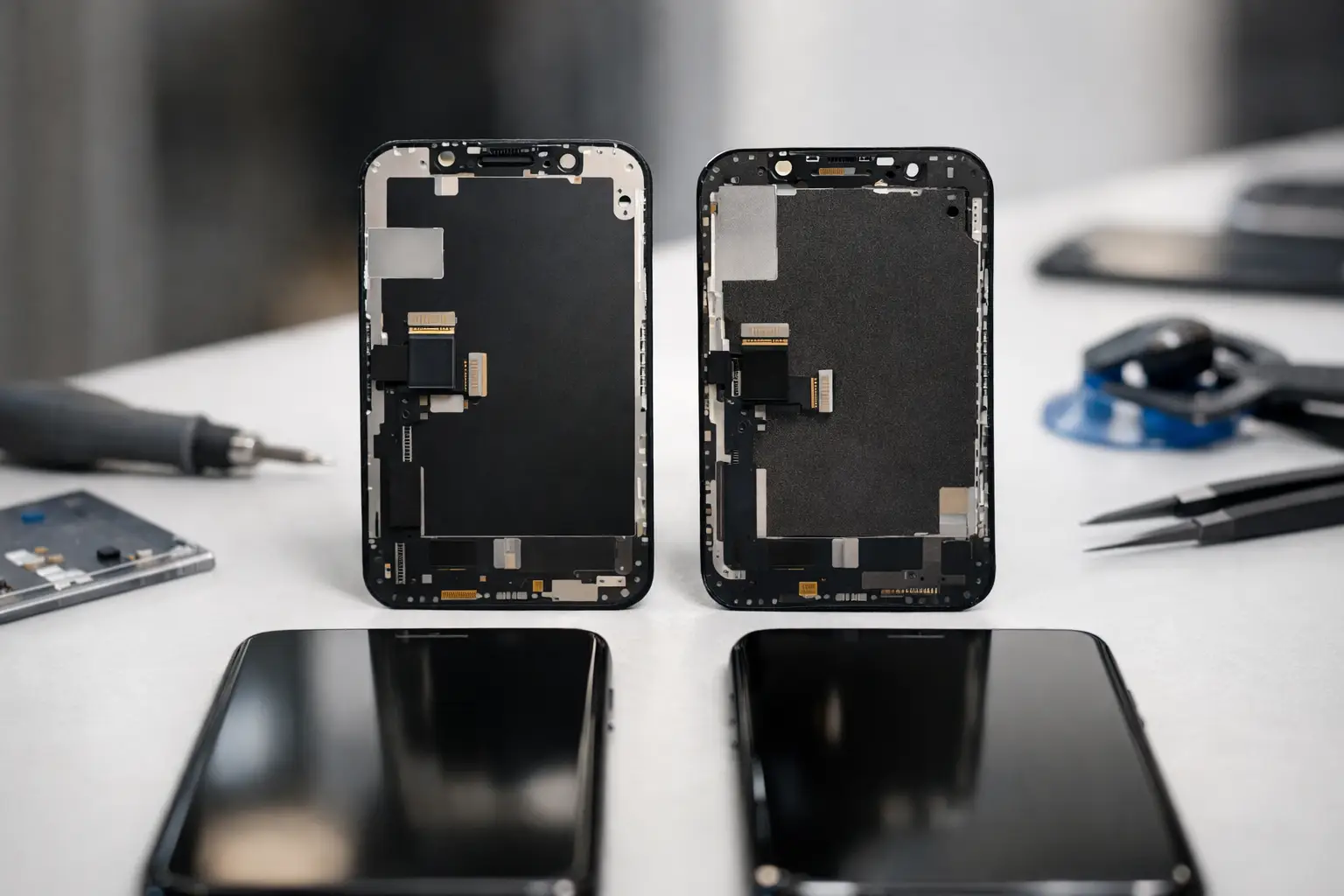
A cracked phone screen is not just a cosmetic problem when you use your device for work, study, school runs, banking and staying in touch. When comparing genuine parts vs aftermarket screens, the right choice is rarely just about finding the lowest repair price. It is about how the phone feels afterwards, how long the repair lasts and what protection you have if something is not right.
For many iPhone owners in Portsmouth and Southsea, the answer comes down to priorities. A genuine screen can be the closest match to the display fitted when the phone left the factory. A good-quality aftermarket screen can offer a dependable, more affordable repair. Neither label tells the whole story on its own.
What counts as a genuine screen?
A genuine screen is an original manufacturer part, made for that exact device model. Depending on the phone and the repair route, it may be a new service part supplied through an approved channel, or an original reclaimed component in suitable condition.
The main appeal is consistency. The display is designed to match the original device’s colour, brightness, touch response and physical fit. On models with OLED displays, a genuine screen is also more likely to reproduce the deep blacks and contrast customers expect from their iPhone.
There is an important detail, though. Modern phones increasingly pair certain components to the handset electronically. On some iPhone models, fitting a genuine part without the correct post-repair configuration may still trigger a parts notification or affect features such as True Tone. The exact outcome depends on the model, the part source and the repair process. A reputable technician should explain this clearly rather than promise that every device will behave identically.
What is an aftermarket screen?
An aftermarket screen is made by a third-party manufacturer rather than the phone maker. That does not automatically mean it is poor quality. There is a very wide range, from thin, low-cost copies that are best avoided to well-made replacement assemblies designed for reliable everyday use.
The key point is that aftermarket parts are not all equal. Two repair quotes that both say “aftermarket screen” may refer to completely different grades of display. One might have weaker brightness, a thicker frame or noticeably different touch sensitivity. Another may be a high-quality OLED or LCD replacement that performs well for normal daily use.
This is why a cheap quote is not always a useful comparison. Ask what grade of screen is being fitted, whether it is OLED or LCD where relevant, and what warranty comes with the repair. Clear answers matter more than vague claims about using “premium” parts.
Genuine parts vs aftermarket screens: the differences that matter
Display quality and everyday feel
The original screen is the benchmark for colour accuracy, maximum brightness and touch response. This is especially noticeable on newer OLED iPhones, where a lower-grade replacement can look less vibrant outdoors, show greyish blacks, or feel slightly less responsive when typing.
That said, not every customer needs an exact factory-level match. If you need a dependable phone quickly and are working to a sensible budget, a quality aftermarket screen can be a practical option. It should still be fitted properly, tested thoroughly and covered by a meaningful warranty.
Screen type matters as much as brand. Some repairs replace an OLED display with an LCD alternative to lower the cost. While this can work, an LCD does not reproduce an OLED screen in the same way. It may use more power, sit differently in the frame and offer lower contrast. For someone who uses their phone heavily for photos, video, navigation or work, that compromise may be more noticeable.
Reliability and durability
A screen is more than the glass you see. It includes the display panel, touch layer, frame, connectors and often the earpiece mesh or sensor brackets. A quality part and careful fitting both play a major role in reliability.
Genuine parts are built to the manufacturer’s specification, but they are not indestructible. A genuine replacement can crack if the phone is dropped again. Likewise, a well-made aftermarket screen can provide years of use when fitted correctly and protected with a decent case and screen protector.
Where problems tend to arise is at the bottom end of the aftermarket market. Poorly made displays can have inconsistent touch areas, reduced brightness, fragile glass or fitment issues. That is why the repairer’s standards matter. The part is only one half of the job; the other half is the technician’s inspection, installation and testing.
Features and notifications
Face ID, the front camera and proximity sensors are delicate areas around an iPhone screen repair. These original components are transferred from your existing screen where possible, and they need to be handled carefully. Damage to a paired component can lead to a costly issue, so this is not a job to rush or treat as a simple glass swap.
Some models may show a message in Settings after a screen replacement, particularly where the device cannot verify the part or configuration. This does not necessarily mean the screen is faulty or unsafe. However, you deserve to know about it before authorising the repair.
Features such as True Tone may also require appropriate programming or calibration to remain available. Ask about this if it matters to you. An honest repair service will discuss what is possible for your specific model rather than giving a blanket answer.
Price and value
A genuine part generally costs more, and the repair price reflects that. For a newer or higher-value phone, that extra cost can make sense. If you plan to keep the handset for several years, use it professionally or are particular about display performance, choosing genuine may offer better long-term value.
An aftermarket screen is often the sensible choice when the phone is older, the budget is tight or the cost of a genuine replacement starts to approach the device’s resale value. The aim is not to push everyone towards the most expensive option. It is to fit a screen that suits the device, your budget and how you use it.
Be wary of prices that seem unusually low. They may exclude a warranty, rely on a low-grade panel, or leave little time for the careful work that protects the phone’s internal components. A transparent quote should make clear what you are receiving and what happens if a part develops a fault.
Questions worth asking before you book
You do not need to become an expert in displays before arranging a repair. A few direct questions will usually reveal whether you are dealing with someone who takes the work seriously. Ask whether the replacement is genuine or aftermarket, what quality level it is, whether it is OLED or LCD, and how the repair is warranted.
It is also reasonable to ask whether your phone’s key features will be tested before you leave. A proper screen repair should include checks for touch response, display quality, cameras, earpiece, microphone, charging and proximity sensor operation where applicable. If the phone has existing damage beyond the screen, that should be pointed out upfront.
For local repairs, direct communication helps. At iHelp Gadget Repairs, customers deal with Dan from enquiry through to completion, so there is no need to repeat the problem to a call centre and then hope the message reaches the technician. That accountability is particularly useful when deciding between part options.
Which option is right for your phone?
Choose a genuine screen when preserving the closest possible original display experience is your priority, particularly on a newer premium handset. It can also be the better route when colour accuracy, brightness, resale value or manufacturer-specification parts matter to you.
Choose a high-quality aftermarket screen when you want a reliable repair at a more manageable price, especially for an older device or one that has already seen a few years of use. The word “high-quality” is doing real work here. A good repairer should be willing to stand behind the part, not simply fit the cheapest available option.
There is no universal winner. The best screen is the one that restores your phone properly, is explained honestly before the work begins and comes with support after you collect it. A clear conversation before the repair can save far more frustration than a bargain price ever will.