
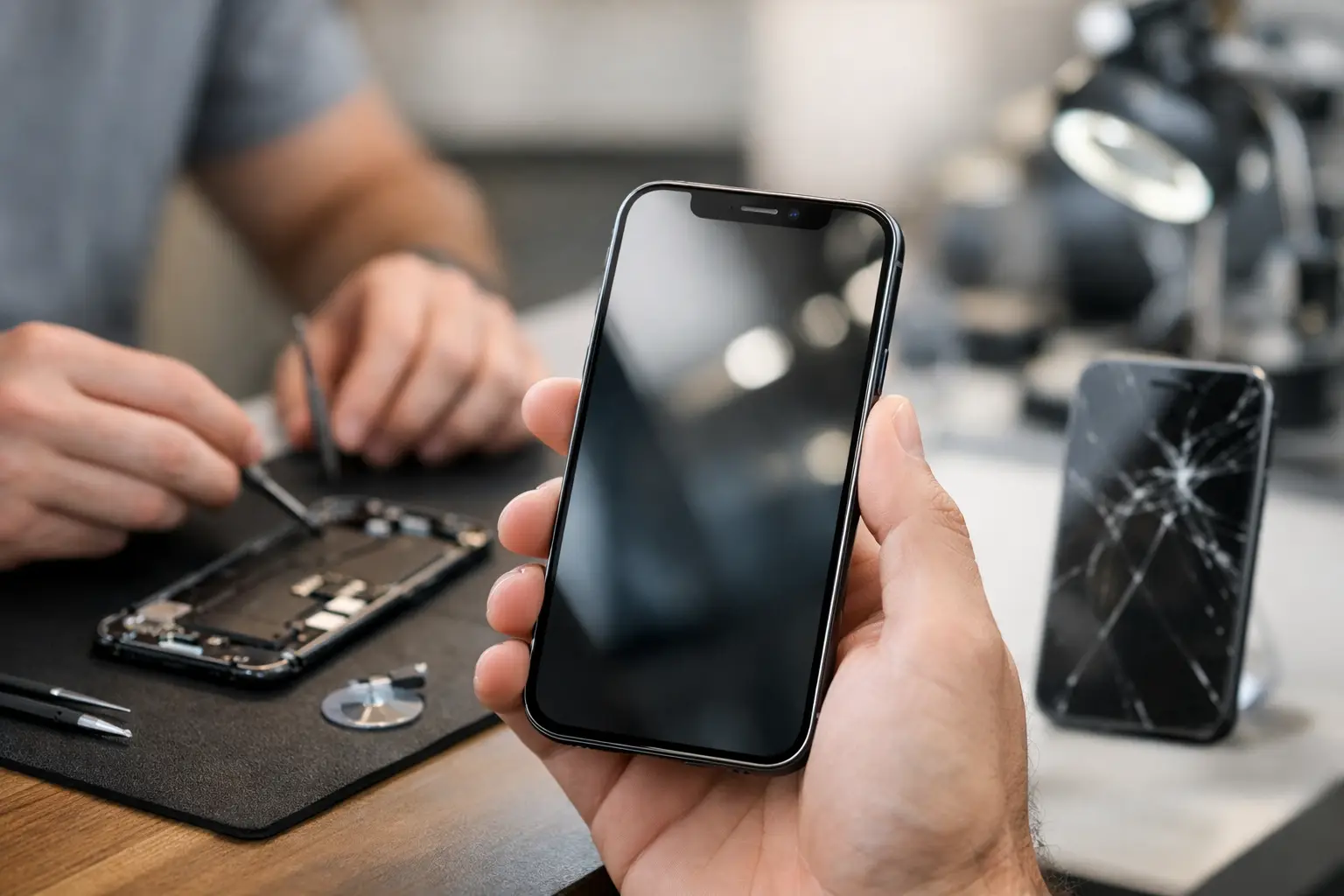
A cracked iPhone screen is rarely just a cosmetic problem. It can make replying to messages difficult, cut a finger, affect touch response or leave the display vulnerable to further damage. When you need the phone for work, university, family or travel around Portsmouth, the priority is understandably getting it fixed quickly. But does iPhone screen warranty matter once the new screen is fitted? Yes – often more than people realise.
A warranty is not simply a line on a receipt. It tells you whether the repairer is prepared to stand behind the screen, the fitting and the quality of their work if something goes wrong after you leave.
Does iPhone screen warranty matter? Yes, for peace of mind
Screen repairs involve more than removing broken glass and fitting a replacement. A technician has to open the phone safely, transfer or protect delicate components, fit the new display correctly and test functions such as touch response, brightness, front camera operation, proximity sensing and Face ID where applicable.
Most repairs go smoothly when the correct parts and fitting process are used. However, a fault may only show itself after the phone has been used for a few days. Perhaps touch starts missing taps at the edge of the screen, the display flickers at low brightness, or the screen begins to lift because an internal component was not seated properly. Without a meaningful warranty, you may be left paying again to put it right.
A good screen warranty gives you a clear route back to the person who carried out the repair. That accountability matters, especially when your phone is central to your day. It also separates a careful local repair service from a quick, low-cost fix that offers little support once payment has been taken.
What should an iPhone screen repair warranty cover?
The exact terms differ between repairers, so always ask rather than assuming. A proper warranty should explain what is covered, for how long and what you need to do if you notice an issue.
For an iPhone screen replacement, cover commonly relates to faults in the replacement part and workmanship. This may include a display that develops lines, fails to light up, has an unresponsive touch area or shows a fitting-related issue under normal use. It should also cover the repair being checked and rectified without an argument over who is responsible.
What it will not normally cover is fresh accidental damage. If the phone is dropped again, crushed in a bag, exposed to liquid or damaged by another impact, that is a new repair issue rather than a warranty fault. This is fair and worth understanding before you book. A lifetime warranty on an iPhone screen, for example, is valuable when it covers faults with the fitted screen for as long as you own it, but it is not a replacement policy for every future crack.
It is also sensible to check whether the warranty applies to the complete repair or only the part itself. If a repairer offers strong cover but makes it difficult to claim, the wording has little practical value. You want straightforward terms and a real person who can inspect the phone promptly.
Part quality and warranty go together
There are different grades of iPhone replacement screens, and the cheapest option is not always the best value. Lower-quality displays can sometimes have weaker brightness, less accurate colour, reduced durability or touch performance that does not feel quite right. On some models, the choice of part may also affect features or how the phone reports the display in settings.
A warranty cannot turn a poor-quality screen into a good one. It is there to protect you if a genuine fault develops, not to disguise compromises made at the start. Ask what type of screen is being used and whether it is a high-quality compatible or genuine part where available. A reliable repairer should answer clearly, without burying you in technical jargon.
The best outcome is a screen that works properly from day one and a warranty that supports you if it does not. Both matter.
Why a local repairer makes warranty support easier
A warranty is only as useful as the service behind it. With some large chains or mail-in providers, a problem after repair can mean forms, reference numbers, posting your phone away and waiting without it. That is frustrating when you rely on the device for train tickets, school messages, banking, shift updates or staying in touch with family.
Choosing a local specialist gives you a more direct route. You can return to the shop, explain what you have noticed and have the phone assessed by someone who understands the repair. There is less chance of being passed between departments or asked to repeat the same issue several times.
For Southsea and Portsmouth customers, speed matters too. A cracked screen should not force you into days without your phone if the repair can be completed efficiently. At iHelp Gadget Repairs, many iPhone screen repairs are completed in under 30 minutes, with direct contact from enquiry through to collection. That makes the warranty meaningful because support remains personal after the repair, not just before it.
When a longer warranty is worth paying for
Not every phone needs the most expensive repair option. If you are replacing an older iPhone that is nearing the end of its useful life, you may decide that a practical, good-quality repair with sensible cover is the right balance. If you have a newer model, use it heavily for work or plan to keep it for several years, stronger warranty terms are usually worth prioritising.
Think about the cost of disruption as well as the repair price. A screen that fails after a bargain repair may cost more in lost time, travel, missed calls and a second repair than a properly fitted screen with dependable cover would have cost initially.
The warranty is particularly valuable if you have had poor experiences with repairs before. If touch issues, display faults or loose screens have caught you out in the past, choose a repairer who is happy to explain their policy before taking the phone apart. Clear answers upfront are a good sign.
Questions to ask before booking an iPhone screen repair
You do not need to become an iPhone expert before arranging a repair. A few direct questions will tell you a great deal about the service.
Ask how long the screen warranty lasts and exactly what it covers. Confirm whether faults in both the part and fitting are included. Ask what quality of replacement screen will be fitted, whether the repair can be completed while you wait, and what happens if you spot a problem after collection.
It is also worth asking whether the phone will be tested before it is returned. A thorough check should cover display quality, touch functionality and relevant front sensors. If your iPhone had other issues before the screen cracked, mention them at the start so there is a clear record of the device condition.
Price still matters, of course. Transparent pricing lets you make a sensible choice without surprises. But when two repair quotes look similar, warranty terms and the reputation of the person carrying out the work are often the deciding factors.
Protecting your repaired screen after collection
Even the best replacement screen benefits from a little protection. A quality screen protector can reduce everyday scratches, while a case with a raised edge offers useful protection when the phone lands face-down. Neither makes the phone indestructible, but both can reduce the chance of another costly accident.
Before leaving after a repair, take a minute to use the phone normally. Type a message, open the camera, adjust brightness and test the top and bottom edges of the display. If something feels wrong, it is far easier to raise it there and then.
Keep your repair receipt too. It is useful proof of the work completed and will usually be needed if you ever need to use the warranty.
A screen warranty matters because it turns a repair from a one-off transaction into a service someone is willing to stand behind. Choose clear terms, good parts and a repairer you can return to with confidence – then you can get back to using your iPhone rather than worrying about the screen.