
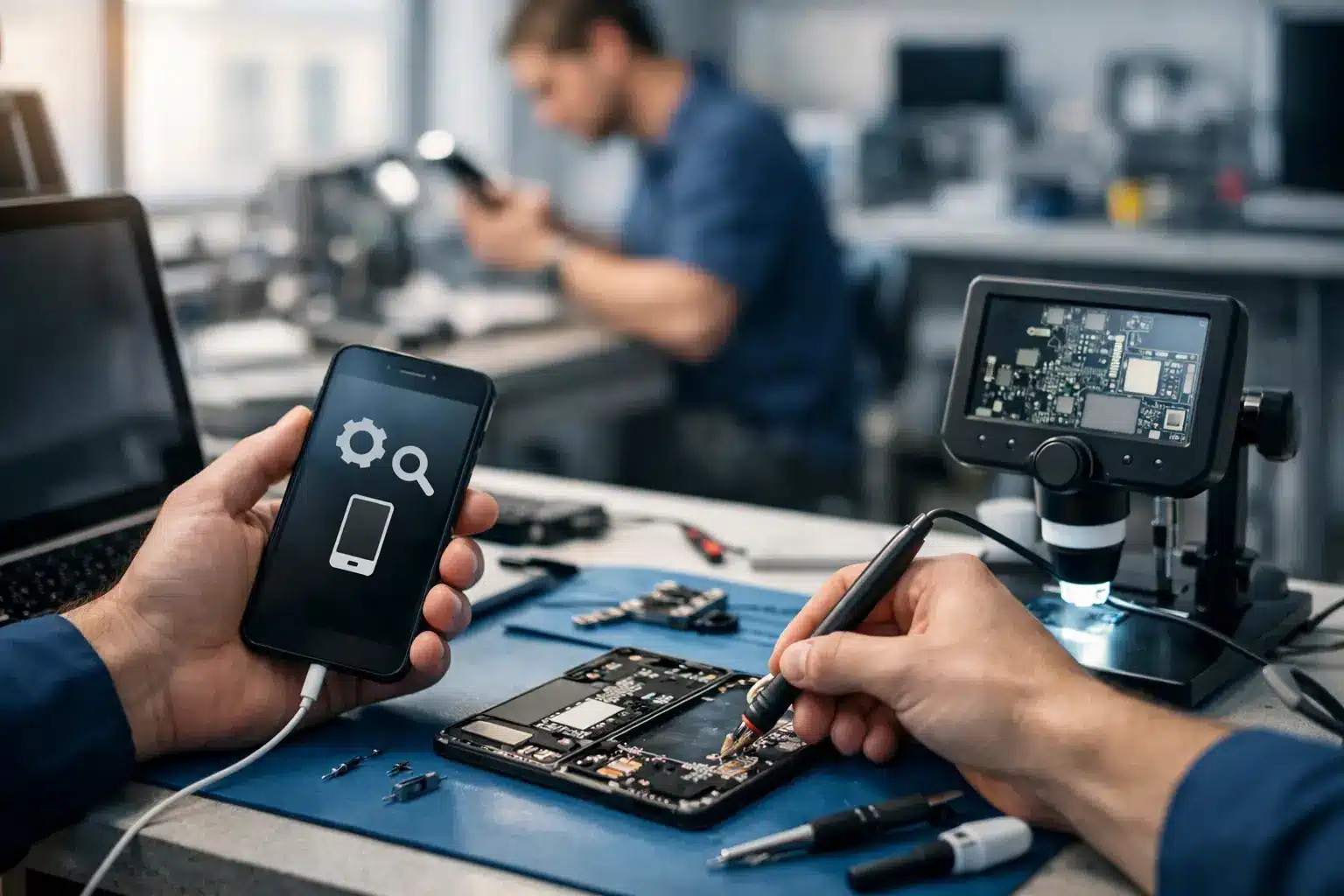
A phone that will not charge, keeps restarting or loses battery far too quickly can bring a normal day to a halt. A proper phone diagnostic service Portsmouth customers can use locally is the sensible first step when the cause is unclear. Rather than guessing at the repair, the device is assessed to identify what is actually wrong and whether fixing it is worthwhile.
For many people, the problem is not just the phone itself. It is missed calls, work apps, tickets, banking, school messages and photos that suddenly feel out of reach. A clear diagnosis gives you the information to make a confident decision, without being pushed into a repair you do not need.
What a phone diagnostic service checks
A diagnostic is an inspection and fault-finding process. It is particularly useful when there is no obvious broken part, such as a visibly cracked screen. The technician tests the symptoms you have noticed, checks the relevant components and considers whether the fault is caused by hardware, software, damage or more than one issue at once.
The exact checks depend on the device and the fault. A phone that refuses to charge needs a different approach from one with no signal, poor battery life or an unresponsive touchscreen. The aim is not simply to find a fault code. It is to establish the likely cause, the appropriate repair and the expected cost before work goes ahead.
Common faults that need diagnosis
Charging problems are among the most common reasons to book a diagnostic. The issue might be a blocked charging port, a worn cable, a failing battery, a damaged connector or a fault deeper inside the phone. Replacing the charging port without testing first can be unnecessary if the real cause is elsewhere.
Battery faults can also be less straightforward than they seem. A battery that drains quickly may have reached the end of its useful life, but it may also be affected by background software activity, poor network coverage, an app issue or internal damage. Testing helps separate a genuine battery failure from a problem that will not be solved by fitting a new one.
Other faults worth investigating include intermittent screen response, random shutdowns, overheating, weak speakers, microphone problems, camera faults, Wi-Fi or Bluetooth issues, and water damage. Intermittent faults are often the most frustrating because they may appear without warning. Explaining exactly when the problem happens can help narrow down the cause quickly.
Why diagnosis is better than a guess
It is tempting to search online, order a part and hope for the best. Sometimes that works, especially with a clear fault such as a smashed display. When symptoms are vague, though, a guess can lead to spending money on the wrong repair and leaving the original issue unresolved.
A professional assessment also helps protect the device. Modern phones are tightly packed, and charging systems, screens, batteries and boards all sit close together. Attempting a repair without the right tools or experience can turn a manageable fault into a more expensive one.
There is another practical benefit: transparency. Once the fault has been identified, you should be told what has been found, what the repair involves and what it will cost. You can then decide whether to proceed, particularly if the phone is older or has suffered significant liquid damage.
What to expect from a local diagnostic appointment
When you bring a phone in, start by describing the issue as clearly as you can. Mention whether it was dropped, exposed to water, recently updated, repaired before or affected by a particular charger or accessory. Small details often matter. For example, a phone that charges only at a certain angle points towards a different set of checks than one that shows a charging symbol but never gains power.
The phone can then be inspected and tested. This may include checking the display, buttons, cameras, speakers, microphones, charging function, battery behaviour and connection functions where relevant. If a fault requires a closer internal inspection, that should be explained before any further work is carried out.
After diagnosis, you should receive a straightforward explanation in plain English. A good repair service will set out the recommended option and give a clear price before proceeding. If a repair is not economical, that is useful information too. Honest advice can save you from putting more money into a device that is nearing the end of its life.
At iHelp Gadget Repairs, customers deal directly with Dan from the first enquiry through to the completed repair. That means the person assessing the fault understands the symptoms you reported and can explain the findings directly, rather than passing messages through a call centre or several members of staff.
Phone diagnostic service in Portsmouth: when to book
Book a diagnostic when a fault is affecting how you use the phone but the cause is not obvious. Do not wait until a charging issue becomes a completely flat device or a small intermittent problem becomes a full failure. Early checks can sometimes prevent further damage, particularly after liquid exposure or a drop.
It is also worth booking when a previous repair has not solved the issue. A replacement battery, screen or charging port may have been fitted elsewhere, but the original fault could lie in another component. A fresh assessment gives you a clearer picture before paying for more work.
If your phone has been in water, act quickly. Switch it off if possible, do not keep trying to charge it and avoid using heat to dry it out. Heat can damage components and repeated charging attempts can worsen corrosion or cause a short circuit. The sooner the device is inspected, the better the chance of limiting the damage.
Questions to ask before agreeing to a repair
A diagnosis should leave you better informed, so it is reasonable to ask a few direct questions. Ask what fault has been found, whether there are any risks, what parts are being used and whether the repair comes with a warranty. You may also want to know the expected turnaround time, especially if the phone is essential for work, study or family life.
The answer will sometimes be, “it depends”. Board-level faults, serious liquid damage and devices with multiple issues can be harder to predict than a standard screen or battery replacement. That is not a reason to avoid repair, but it is a reason to choose a technician who explains the uncertainty honestly rather than promising a result before the device has been assessed.
For straightforward iPhone screen repairs, fast turnaround can make a real difference. Where the fault is more complex, taking the time to diagnose it properly is the better route. A quick repair is valuable, but only if it addresses the right problem.
Prepare your phone before bringing it in
If the device still works, back it up before any repair. Save photos and important files to your preferred backup service or a computer, and make sure you know your passcode. Repairs should not normally affect your data, but backing up is sensible whenever a device has a fault.
Remove the case and any accessories if they are not needed to demonstrate the issue. Bring the charger or cable if you think it may be involved, as testing the full setup can be helpful. If the phone will not switch on, do not worry about completing every step – simply explain what happened before it stopped working.
A reliable diagnostic is not about finding the most expensive repair. It is about getting a clear answer from someone local who will treat your phone with care. If something has changed in the way your device charges, holds power or behaves day to day, getting it checked now can turn a worrying fault into a practical next step.