
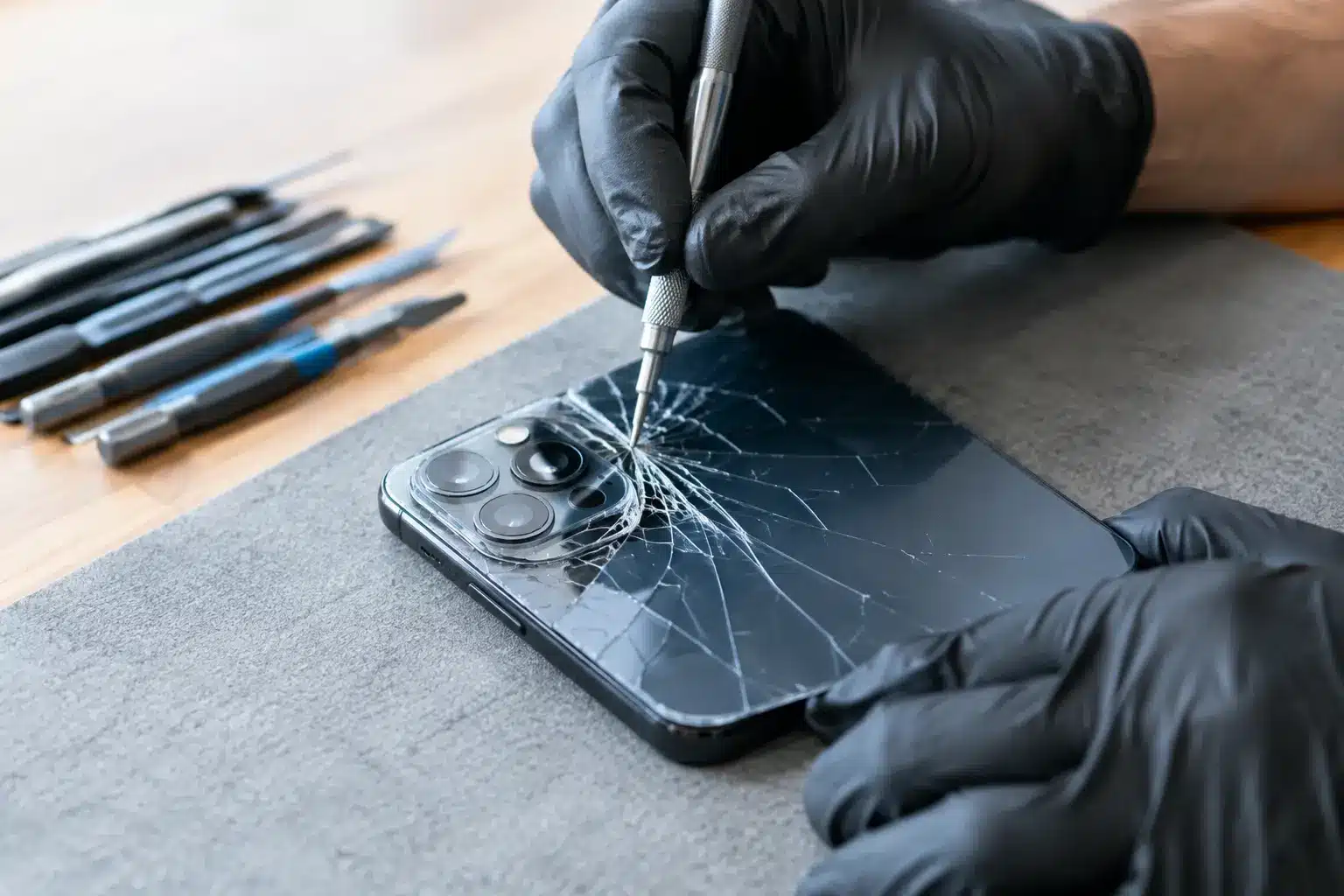
A cracked back can feel like a purely cosmetic problem – until shards catch your hand, the camera surround starts to lift or you begin worrying about moisture getting inside. Back glass repair is often a sensible way to restore a phone that still works perfectly in every other respect, particularly when it is an iPhone you rely on for work, study, family and day-to-day life.
The right decision depends on more than how dramatic the damage looks. The model of phone, the location of the crack and whether other features have been affected all matter. A proper assessment gives you a clear answer before you spend money on a repair that may not suit the condition or value of the device.
When back glass damage needs attention
A single small crack in the middle of the rear panel may not stop your phone working straight away. Even so, the glass has already lost some of its protection. Hairline cracks can spread with everyday pressure, a warm pocket, a small knock on the kitchen worktop or the flex of taking the phone in and out of a case.
Repair becomes more pressing when the glass is loose, missing in places or sharp to touch. Exposed gaps around the edges can let dust and moisture reach components that were not designed to be exposed. A phone that was previously water-resistant should not be treated as water-resistant once its housing has been damaged, even if it appears to be working normally.
Pay particular attention to damage around the camera lenses, flash or charging area. The rear panel also sits close to the battery and wireless charging components on many modern phones. A crack does not automatically mean these parts are damaged, but it is worth having the phone checked if wireless charging becomes unreliable, the camera struggles to focus or the handset gets unusually hot.
If the battery appears swollen, the back is lifting away from the frame, or you notice a chemical smell or excessive heat, stop using and charging the device. That is not a standard cosmetic repair situation. Switch it off where safe to do so and arrange professional advice promptly.
What a back glass repair actually involves
Modern phone backs are not usually a simple cover that can be popped off and replaced. On many models, the rear glass is securely bonded to the frame and sits around delicate components. A safe repair requires controlled heat, specialist tools and careful removal of broken material without damaging the camera assembly, charging coil, frame or internal cables.
The method varies between models. Some phones allow the rear housing or glass to be replaced more directly, while others require a more involved process. This is one reason an accurate quote should be based on the exact model, rather than a vague description such as a recent iPhone or Samsung.
A good repair should leave the phone clean, secure and comfortable to use, not simply cover the cracks for a few weeks. The technician should also check that essential functions still operate as they should, including cameras, charging and wireless charging where applicable.
At iHelp Gadget Repairs, customers deal directly with Dan from the first enquiry through to the completed repair. That matters when a job needs model-specific advice rather than a one-size-fits-all answer. You can discuss the condition of the phone, the likely repair route and the cost before committing.
Is repair better than replacing the phone?
For a phone with a healthy battery, clear display and reliable performance, repairing the rear glass can be far better value than replacing the whole handset. It lets you keep the device you know, your settings and your photos without the expense and disruption of moving to a new phone.
It is not always the right choice, though. If the handset also has a failing battery, damaged cameras, charging faults and a badly bent frame, the combined cost may be difficult to justify. The same applies to older entry-level devices where a replacement handset offers better long-term value.
A straightforward conversation is more useful than being pushed towards the most expensive option. Ask what has been damaged, whether the frame is sound, what part will be used and whether there is a warranty on the work. Transparent answers help you decide whether to repair now, protect the device temporarily or put the money towards a replacement.
Why DIY back glass repairs can go wrong
Back-glass repair kits and online videos make the job look quick, but the risk is not limited to cutting yourself on broken glass. Too much heat can damage internal components or affect the battery. Too little heat can lead to force being applied in the wrong place, bending the housing or cracking surrounding parts.
Adhesive is another common issue. If the rear panel is not fitted accurately, it can lift at the edges, collect dust or press against the camera area. Cheap replacement glass may also have poor fit, inconsistent colour or a finish that feels noticeably different from the original.
A case can be a sensible short-term measure if the cracks are minor and there are no exposed sharp edges. It is not a repair. Cases do not restore the structural strength of the handset or reseal gaps around damaged glass. Clear tape is even less reliable, particularly near heat, charging ports and cameras.
What affects the cost of back glass repair?
The exact phone model is the biggest factor. Newer flagship devices tend to use more complex construction and can need more time to dismantle or refit safely. The extent of the damage also matters. A cracked panel on an otherwise straight, working handset is very different from a device with frame damage, a broken camera lens or signs of internal impact.
Part quality affects the price too. A lower quote is not necessarily poor value, but it should be clear what you are being offered. Quality parts, careful preparation and warranty support are worth considering, especially on a phone you expect to keep for another year or two.
Turnaround can vary by model and the availability of the correct part. Screen repairs may often be completed very quickly, but back glass work should not be rushed simply to meet a headline time. The best approach is to ask for an honest timeframe after the phone has been identified and inspected.
Before you bring your phone in
If the phone still works, back it up before any repair. This is good practice for any device service, even when the issue is limited to the exterior. Remove any case and let the technician know if the phone has also been dropped in water, has lost battery quickly or has developed charging or camera problems since the impact.
Do not pick at loose glass. Small fragments can work their way into fingers, clothing and bags. If you need to carry the phone before the appointment, keep it in a case or place it carefully in a soft pouch, and avoid putting pressure directly on the damaged area.
For Portsmouth and Southsea customers, a local repair means you can ask questions face to face and know who is handling the device. You do not have to package it up, post it away and wait for a generic update from a national service centre.
A cracked rear panel does not always mean your phone is finished. Get it assessed while the damage is contained, and you can make a calm, informed choice that protects both the handset and the information you rely on every day.