
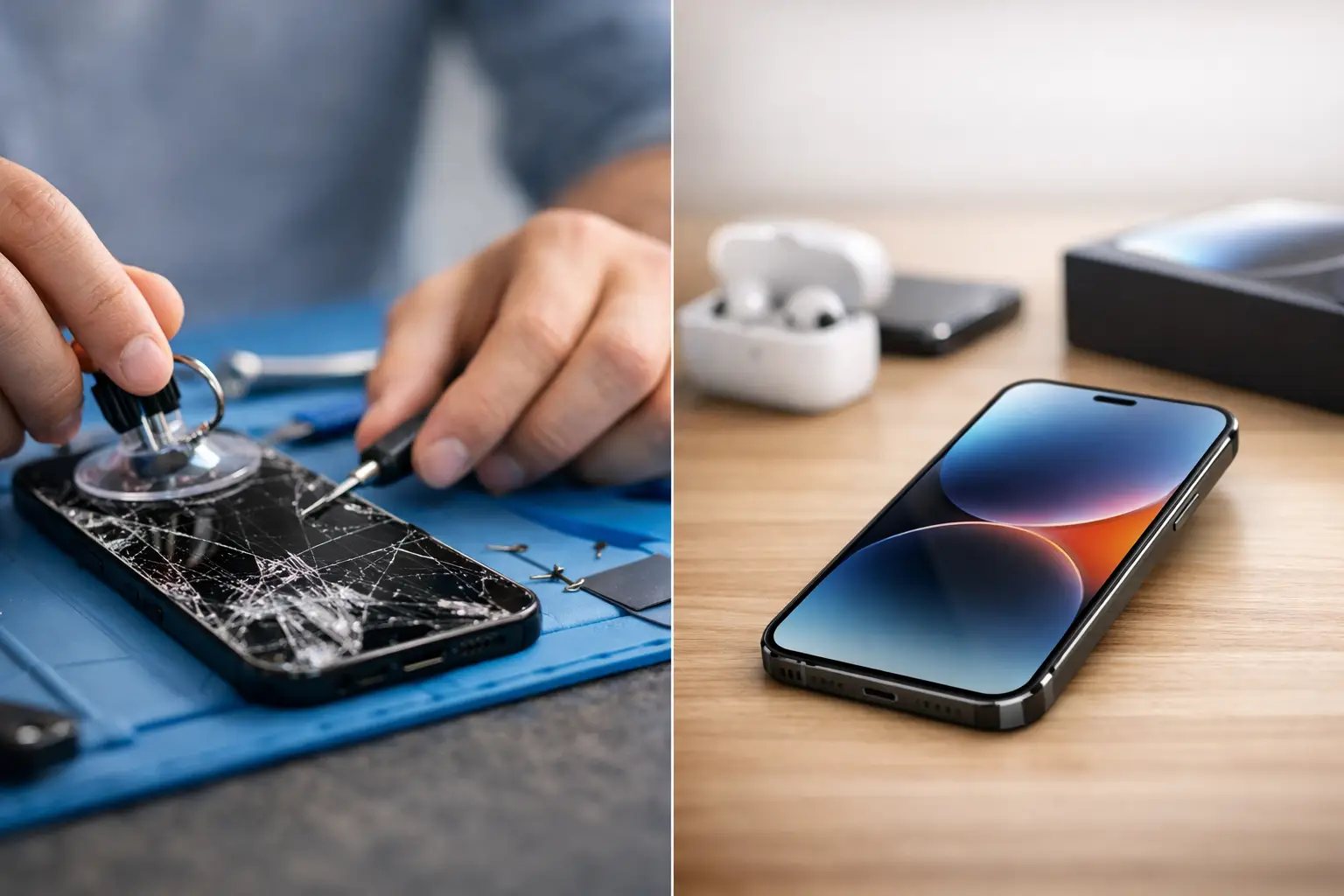
A cracked screen usually creates the same debate in seconds: pay for a repair, or take it as a sign to replace the whole handset. If you are weighing up screen replacement vs new phone, the right answer depends less on the crack itself and more on the age of the device, the total repair cost, and how well the rest of the phone is still performing.
For most people, the screen is the part that gets damaged first while everything else keeps working as normal. That matters, because a smashed display can make a perfectly good phone feel finished when it is not. Before spending hundreds on a new device, it is worth looking at what you are actually gaining – and what you may be throwing away.
Screen replacement vs new phone: start with the real problem
The first question is simple: is the screen the only issue?
If your phone still charges properly, holds battery reasonably well, takes calls, connects to Wi-Fi, and performs as expected, then the damage may be cosmetic and functional rather than terminal. In that case, replacing the screen is often the sensible route. A good quality repair restores usability quickly and usually costs a fraction of a new handset.
If the phone has multiple faults, the decision changes. A cracked screen plus poor battery health, charging issues, Face ID or camera faults, or signs of motherboard damage can push the maths in the other direction. One repair is manageable. Several repairs on an ageing device can become false economy.
This is where an honest assessment matters. People often assume they need a new phone because the damage looks dramatic. In reality, the better test is whether the phone was meeting your needs before the accident happened.
When a screen replacement makes more sense
A screen replacement is usually the better option when the phone is still current enough to have a few good years left in it. If your handset is only one to three years old and had no major issues before the drop, replacing the screen is often the most cost-effective choice.
The biggest reason is value. New phones are expensive, and many people end up paying for features they do not really need. If your current device already handles your work apps, banking, messages, photos and day-to-day use without frustration, replacing the damaged screen can get you back to normal without the bigger financial hit.
There is also the question of speed. Buying a new phone is rarely as simple as walking out with a box and carrying on. You still need to transfer data, log back into apps, reconnect banking, sort eSIM or SIM settings, and make sure everything from photos to notes has copied across properly. A straightforward screen repair can often be done far faster and with far less disruption.
For local customers in Portsmouth and Southsea, that convenience matters. If your phone is central to work, family life or study, being without it for long is often more painful than the repair bill itself.
When a new phone is the better call
There are times when replacement is the smarter long-term decision.
If your phone is already several generations old, no longer receives software updates, has poor battery life, and has started slowing down in everyday use, a screen repair may simply delay a wider upgrade. The same applies if the device has been bent, water damaged, or repaired multiple times before.
Cost matters here too. If the repair price is getting close to the real-world value of the phone, it is fair to ask whether that money would be better put towards something newer. That does not mean every older handset should be written off. It means the repair should make sense in proportion to the life you are likely to get back from it.
A new phone can also be the better option if your needs have changed. Perhaps you now need more storage, stronger battery life, a better camera for work, or improved performance for heavier apps. If the old device was already falling short before the screen cracked, repair may not solve the actual problem.
The hidden costs people forget
The screen replacement vs new phone decision often gets framed as repair price versus purchase price. That is only part of the picture.
A new handset can bring extra spending that people do not always factor in straight away. You may need a new charger, case, screen protector or adapter. Insurance may change. If you are buying through a contract, the monthly cost can run on for years. For some people, replacing the phone also means replacing accessories that no longer fit the new model.
There is also the cost of your time. Setting up a new device is easy enough when everything goes well. When it does not, it becomes a frustrating evening of passwords, verification codes and missing apps. If your current phone is otherwise reliable, a repair can be the less disruptive option by a wide margin.
Quality of repair makes a big difference
Not all repairs are equal, and this is one reason some people lose confidence in the repair route.
A poor quality screen can leave you with weak brightness, bad touch response, reduced durability or issues with True Tone and general display quality. That is why the choice is not just repair versus replacement. It is also about who is doing the repair, what parts are being fitted, and what warranty stands behind the work.
A proper screen replacement should restore the phone to dependable daily use, not leave you compromising every time you unlock it. Good parts, clear pricing and a proper warranty remove a lot of the risk that people associate with third-party repairs.
That is also where local accountability helps. Dealing directly with the person carrying out the work is very different from handing your device into a chain and hoping for the best. At iHelp Gadget Repairs, customers speak to Dan directly, which keeps things simple and gives people a clear answer on what is worth repairing and what is not.
How to make the decision without overthinking it
If you are unsure, a few practical questions usually bring the answer into focus.
First, ask yourself whether you were happy with the phone before the screen broke. If the answer is yes, repair is often the logical choice.
Second, consider the age of the device. A newer model with one clear fault is generally worth saving. An older model with several signs of wear may be reaching the point where replacement makes more sense.
Third, compare the repair cost against the cost of replacing like for like, not just the cost of the newest handset on the market. Many people jump straight to the price of a brand-new flagship phone, when the real comparison should be what it costs to get back to a phone that does the same job.
Finally, think about downtime. If you need your phone working today or tomorrow, a fast local repair can be far more practical than shopping around, waiting for delivery, and setting everything up from scratch.
A quick note on resale and trade-in value
Some customers lean towards a new phone because they plan to trade in the damaged one. That can work, but cracked screens usually reduce trade-in value sharply. In some cases, repairing the screen first can leave you with a better-value device to keep using for another year. In others, it can improve resale potential enough to offset part of the repair cost.
Again, it depends on the handset and condition overall. A clean, fully working phone is easier to sell or trade than one with obvious damage, even if the internals are fine.
The sensible answer for most people
If your phone is still reliable, up to date enough for your needs, and only the screen is damaged, repair is usually the better decision. It is cheaper, quicker, and less disruptive. If the phone is ageing, struggling, and showing multiple faults, replacing it may save you money and hassle over the next year or two.
The best decision is rarely the most dramatic one. It is the one that gets you back to a dependable phone without overspending. A good repair should feel like common sense, not a gamble. If you are not sure which side of the line your device falls on, getting a straightforward assessment from a trusted local specialist is often the quickest way to stop guessing and make a confident choice.