
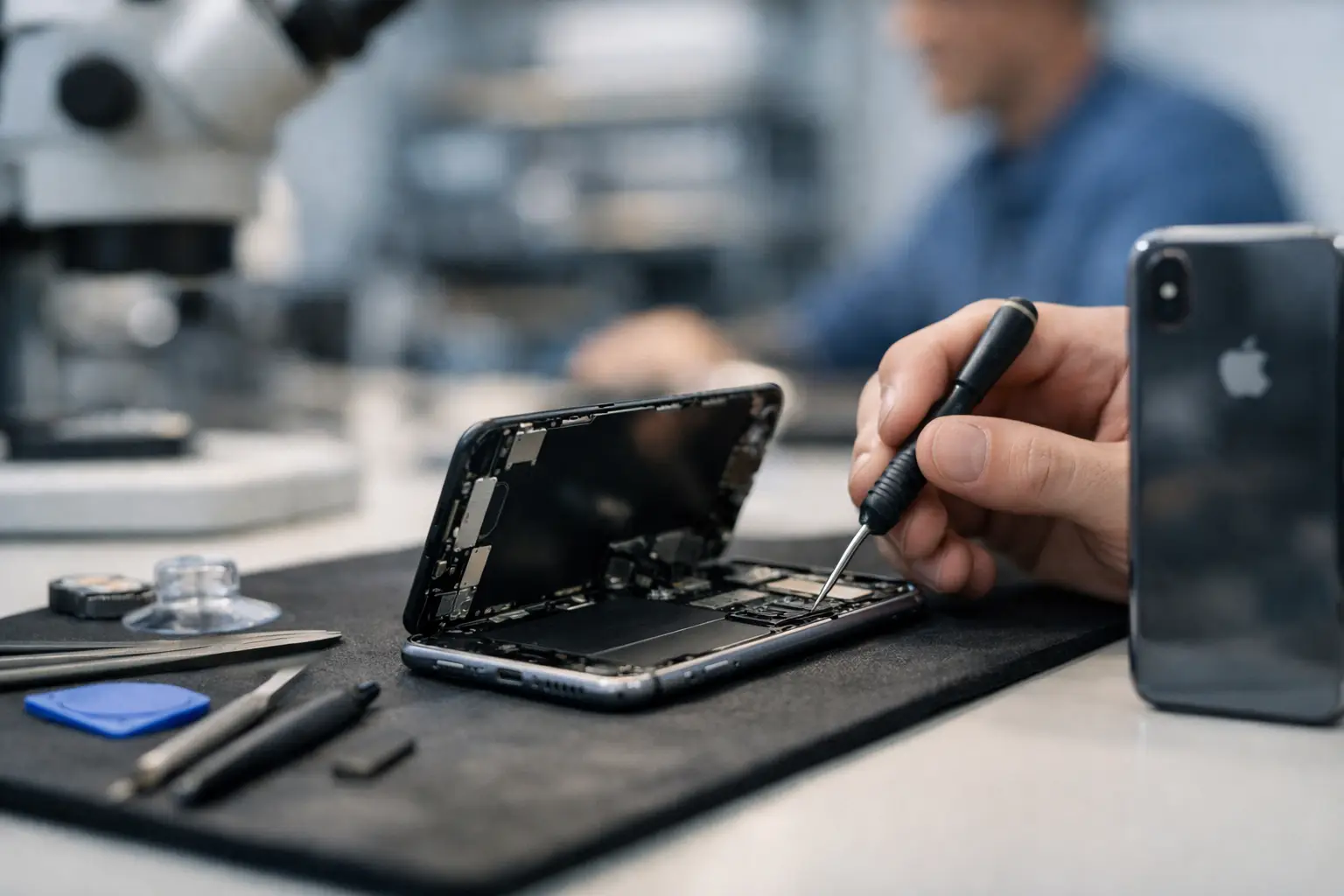
A cracked iPhone screen is obvious. Poor iPhone repair quality often is not – at least not on the day you collect it. The display may light up, the phone may appear to work, and the price may look tempting. The real difference can show itself weeks later through weak touch response, reduced brightness, a battery that drains quickly, a screen lifting at the edge or a charging fault that was never properly diagnosed.
When your phone is used for work, study, family messages, banking, travel and everyday life, a repair is not simply about getting it switched back on. It is about having it repaired properly, quickly and with someone accountable if there is a problem afterwards.
What good iPhone repair quality looks like
Quality is not one feature. It is the combination of the replacement part, the technician’s workmanship, the checks carried out before and after the repair, and the warranty behind it.
A good screen replacement should feel right from the first use. Touch should respond across the whole display, the image should be clear and evenly lit, and the screen should sit flush within the frame. The front camera, earpiece, proximity sensor and Face ID-related components also need careful handling. A rushed repair can leave a phone technically usable while compromising features you rely on every day.
The same principle applies to batteries and charging faults. Replacing a battery without checking the charging port, cable connection or power management issue may not solve the original problem. Equally, a phone that will not charge is not always in need of a new port. It could be compacted pocket debris, a worn cable, a battery fault or internal damage. Proper diagnosis prevents paying for the wrong repair.
The replacement part matters, but it is not the whole story
There are different grades of iPhone replacement parts, and the cheapest available option is rarely the best value over time. A low-quality screen may have weaker brightness, poorer colour accuracy, thicker glass or touch sensitivity that feels slightly off. Some parts also affect battery life because they draw power less efficiently.
That does not mean every repair requires the same part choice. The right option depends on your iPhone model, its condition, your budget and how you use it. Someone keeping an older phone as a reliable spare may make a different decision from a professional who needs accurate screen colour and dependable all-day performance.
A reputable repairer should explain the available options clearly rather than hiding behind vague phrases such as “premium quality”. Ask what type of part is being fitted, whether it is high quality or genuine where available, and what warranty applies to both the part and the fitting. Clear answers are a good sign. Pressure to decide immediately is not.
Workmanship protects the features around the fault
An iPhone is tightly packed. Replacing a screen involves more than removing broken glass and attaching a new display. Small connectors, brackets, seals, sensors and screws must be handled in the correct order and returned to the correct position.
This is where experience matters. A technician should inspect the device for frame damage before fitting a new screen, because a bent frame can prevent it from sitting correctly. They should also test the display, cameras, speakers, buttons, charging function and relevant sensors after the work is complete.
Water resistance needs an honest conversation too. Once an iPhone has been opened, its original factory seal cannot be treated as guaranteed. Quality adhesive and careful fitting can help restore protection, but no responsible independent repairer should promise that a previously opened phone is fully waterproof. It is sensible to keep the phone away from water after any repair, especially if it has suffered a hard impact or previous damage.
Why a quick repair should still include proper checks
Speed matters when your iPhone is your alarm clock, train ticket, work phone and connection to home. A screen replacement completed in under 30 minutes can be a genuine convenience, provided the work is organised and the technician is not cutting corners.
The difference is preparation. An experienced local specialist knows the common faults, keeps suitable parts available and follows a consistent process. That makes fast repairs possible without treating your device like a production-line job.
Before work begins, the fault should be confirmed and the condition of the phone recorded. After the repair, the important functions should be checked in front of you where practical. This includes touch response, display clarity, charging, cameras and sound. If there is a limitation caused by existing damage, it should be explained before you agree to the repair, not raised as a surprise afterwards.
Warranty is a practical test of iPhone repair quality
A warranty is not just a line on a receipt. It shows whether a repair business is prepared to stand behind its workmanship once you have left the shop.
Read what is covered. A useful warranty should deal with faults in the fitted part or the repair itself, while being clear that new accidental damage, liquid damage or later impact cannot be included. The length matters, but so does the process. If something is not right, can you return to the same person who repaired it and have the issue assessed without being passed between departments?
This is one advantage of choosing a local, owner-led repair service. At iHelp Gadget Repairs, customers deal directly with Dan from the first enquiry through to completion. That continuity makes it easier to ask questions, understand the repair and get straightforward help if a covered issue develops. A 12-month warranty, alongside a lifetime warranty on iPhone screens, gives customers a clear level of reassurance when the repair is eligible.
Questions worth asking before you book
You do not need technical knowledge to choose a repairer with care. Start with the repair itself: ask what is likely to be causing the fault, what part will be used and whether the price includes fitting, testing and warranty cover.
It is also worth asking about turnaround time and whether an appointment is needed. A local repairer who can assess the phone promptly may save you from being without it for days. If the fault needs further investigation, an honest technician will say so rather than promise a fix before seeing the device.
Finally, look beyond the headline price. Reviews can show whether customers mention clear communication, reliable repairs, fair pricing and how issues were handled afterwards. A low price is only good value if the repair lasts and the business is available should you need support.
When repair quality depends on the phone’s condition
Not every phone is an ideal repair candidate. If an iPhone has a severely bent frame, extensive liquid damage or repeated faults from previous repairs, a new screen or battery may not return it to perfect condition. The right repairer will explain the risk and let you decide with the facts in front of you.
For many devices, though, a well-fitted quality screen, battery or charging repair can extend useful life considerably. That can be more affordable and less wasteful than replacing a phone that still suits your needs.
Choose the repair based on more than how quickly a price is quoted. Look for clear diagnosis, quality parts, careful fitting, sensible warranty cover and a local technician who will still be there after the repair. Your iPhone does a great deal for you every day – it deserves a repair that does the same.